
How I Got a Neurology Internship in France After Studying Medicine in Kenya
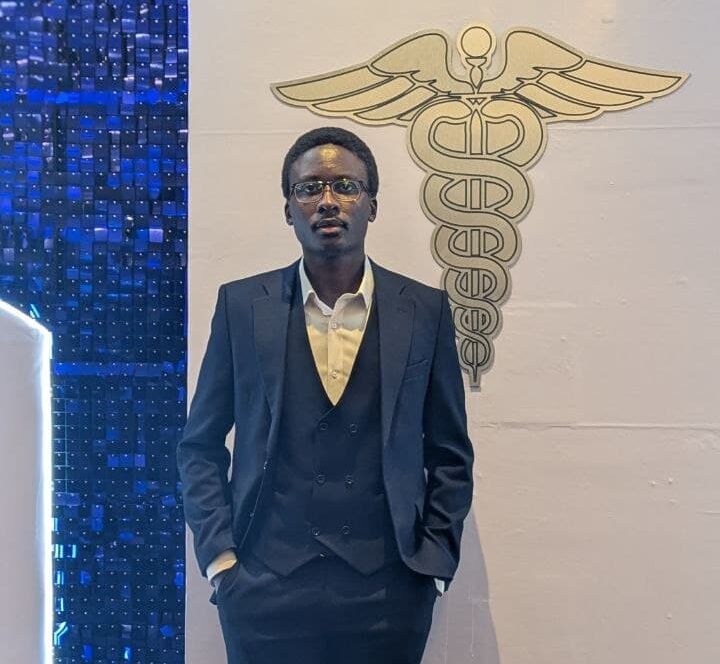
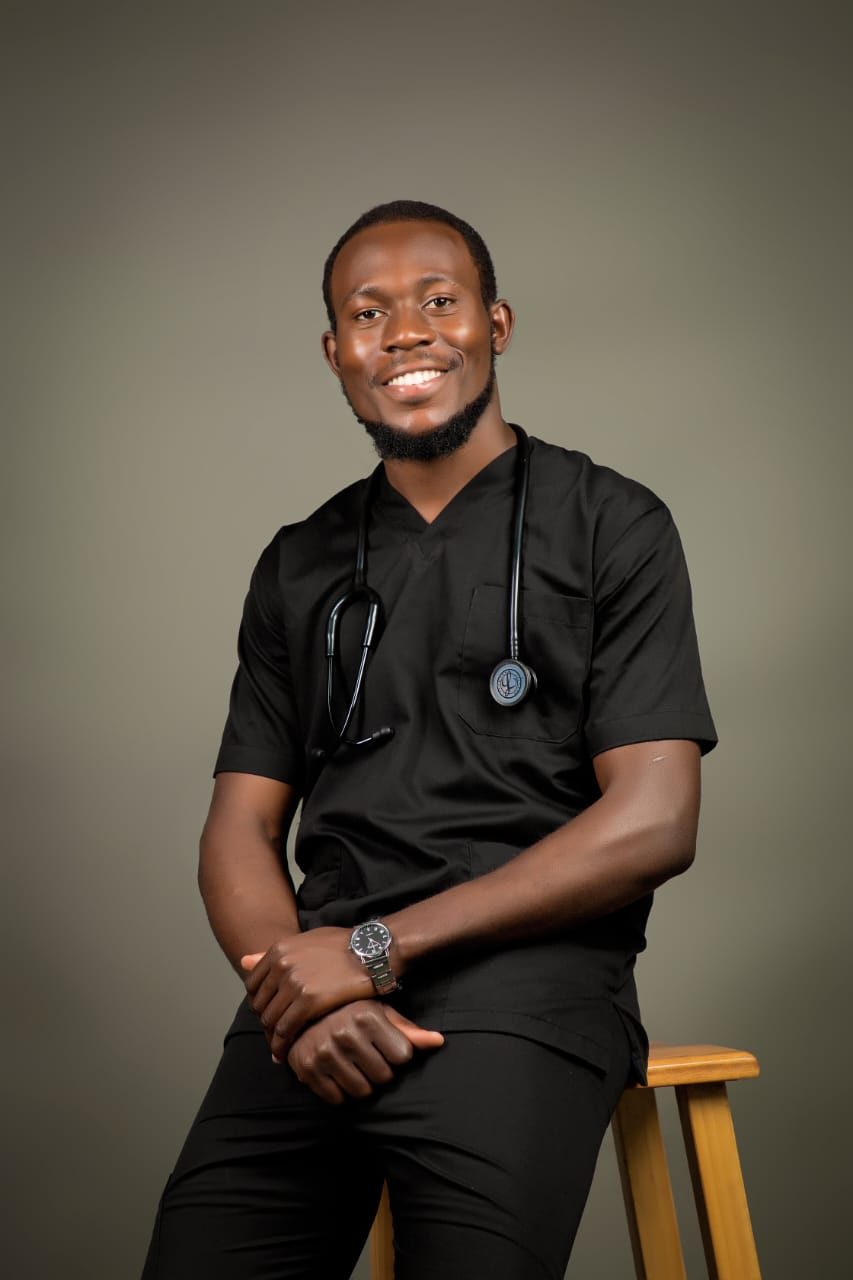
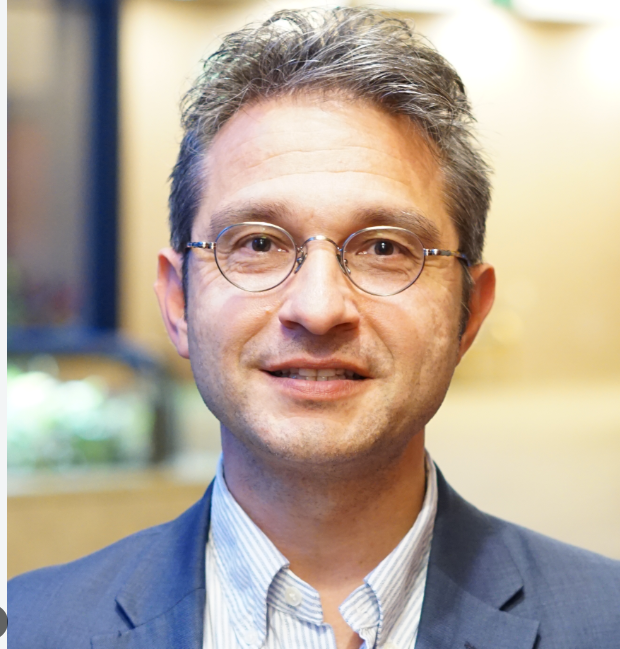
Dr. Janu Stower has just completed his Bachelor of Medicine and Bachelor of Surgery at the University of Nairobi, and is now headed to Paris on the 2026 French Government Internship Scholarship in Neurology. He will begin the internship on 30th September at Hôpital Bicêtre, a teaching hospital under the University of Paris-Saclay. In this conversation with mTV’s Manu Wandera, he walks through his journey learning French from high school onward, the process of applying for the scholarship, and why neurology has held his attention since he was ten years old.
Tell us who Dr. Janu Stower is.
Thank you for this opportunity to share something that is so important to many medical students. I’ve just completed my Bachelor of Medicine and Bachelor of Surgery at the University of Nairobi. My journey there has been more about juggling a lot of things and trying to combine them into one. I’ve done two French diplomas, and I’ve also done an intercalated degree, a one-year research course where you’re able to publish your own research. Mine was a Bachelor of Science in Medical Physiology, alongside the main degree, Bachelor of Medicine, Bachelor of Surgery.
You mentioned two French diplomas. Was this the first time you did French, or did it start in high school?
It started way back in high school, at Mang’u High School. At reception, we were asked to pick our subjects, so alongside the compulsory ones, I picked French and Computer Studies. At first it felt completely new, and honestly I didn’t have a strong reason for doing it, it was just curiosity. I did it up to Form Four and sat KCSE French, which according to the European framework of languages is around B1. The levels run from A1, the most basic, up to C1 or C2.
After high school I took a break of about two to three years. I wasn’t sure if I should progress further, and there weren’t good opportunities at the time. Then around third year, just after we’d finished, I saw an announcement in our class group advertising the French club in medical school, AFRÈME-Association Francophone des Étudiants et Médecins. It’s a nationwide club for French-speaking doctors and medical students.
I reached out to one of the contacts, who’s now a doctor, Dr. Esperancia Kapanga. She explained the courses they run, including one called the DFP, Diplôme de Français Professionnel en Santé, a professional French language diploma for healthcare workers. Some people call it ‘medical French,’ though that undersells how substantial the course actually is. I joined the club and enrolled. I wasn’t sure at first whether there was a fee, but once our names were submitted to the embassy, we were told it was a full scholarship, for both the course and the exams, funded by the French embassy.
You said KCSE French was already B1. Why start the DFP at B1 again?
Because I’d taken a three-year break, and with foreign languages, the longer you go without practicing, the more your level drops. By the time I applied, I’d probably dropped back to A2, just basic recognition and introductions. If you don’t practice, your level goes down. Even now, at C1, I know that if I took a two to three year break, I’d likely fall back to B2, I’d have the vocabulary but struggle to speak fluently. That’s what happened to me, so I decided to restart at B1 and see how it went.
“If you don’t practice a language, your level goes down, even after you’ve learned it.”
I finished B1 with a distinction, which meant I was moved up rather than simply passing into B2. Then I enrolled for B2, which took two years, 2024 to 2025, and I completed it in March this year. Again, a distinction meant I was awarded C1 instead of B2, which is the highest level the DFP offers.
How long did each level take?
B1 took one year. B2 took two years. Lectures are run by Alliance Française Nairobi, close to main campus, usually in the evenings online, about two hours, with physical discussion sessions some weekends. It’s manageable alongside coursework.
How is this different from a general French course?
It’s far more technical. It’s essentially translating everything you learn in medicine, pathology, physiology, anatomy, clinical work, into French. It’s not day-to-day conversation, it’s hospital-setting conversation. A course like DELF is general and something you could largely train yourself for. The DFP needs someone to actually guide you through it.
What are the requirements to join?
At the moment there’s no B1 course anymore, it was scrapped because there wasn’t enough demand. Now you need a minimum B1 level of French already, whether from KCSE or a general course like DELF, before you can join the DFP at B2.
How competitive were the scholarships for B1 and B2?
B1 wasn’t competitive at first, they were trying to get people in. But there was a huge drop-off, out of about 50 people enrolled nationwide, from universities like Kenyatta, Maseno, Moi, Egerton, only 10 to 14 actually sat the exam. So roughly 36 to 40 people dropped out for B1 alone.
B2 is worse, because it’s more advanced. The embassy introduced interviews, and you now have to demonstrate you’re already at B1 before you can even apply. Scholarships are limited to around 10 to 15 students for B2. As of last Friday, there were already 33 applications for a cohort of 10 to 15 spots, and people were still applying. You need to show not just that you meet the B1 bar, but why you specifically need the course and what your plans are for it.
How often does a new cohort open?
Usually right after the current cohort finishes their exams, whether that takes one and a half or two years. This current round of applications closes soon, interviews are on Monday. The DFP certificate itself has lifetime validity, unlike general French certifications like DELF, which expire and need renewing. It’s certified by the Chamber of Commerce in Paris, so it’s internationally recognized, and fully sponsored. Doing it independently would cost around 90,000 to 100,000 shillings, roughly 30,000 for the exams alone and the rest for the course.
Beyond the language courses, what else does AFREM run?
There’s a program called DFMS, more like a fellowship for postgraduate students. The requirement is at least B2 in the DFP. Once you’ve enrolled for an MMed, even before starting, you can begin the application process. You go to a French teaching hospital under the University of Paris-Saclay for four to six semesters, about two years, functioning as a registrar there, paid like the French residents, on a full scholarship covering flights, accommodation through Campus France, everything. When you come back, the credits transfer, so if you went after first year and spent two years there, you’d return to join fourth year. The first application under this program is happening this year, for someone doing an MMed in General Surgery. We’re also exploring research exchange programs with the embassy for undergraduates, particularly those on the long holiday after finals who are interested in research.
What has the experience of learning French actually been like, the highs and lows?
The main challenge has been finding opportunities to actually practice. French isn’t an official language in Kenya, so very few people speak it. Even Francophone Africans living here, from West or North Africa, often don’t want to speak French once they’re in Kenya, they’d rather switch to English. People tend to hold onto the language of their formative years. It’s the same as someone who’s learned German and finally gets to Germany, they don’t want to speak English there, they want to practice German.
Class time doesn’t help much either. A one-hour session with about 10 students means you might only get 10 minutes of actual speaking time if you add it all up. And with a foreign language, knowing the material isn’t enough, you have to practice speaking it to become fluent.
How do you plan to keep practicing, even after the internship?
Honestly, the same combination I already use. I go to Alliance Française for movie nights, karaoke, health talks, career talks, anything in French, just to interact with fluent speakers. Watching French films helps with understanding spoken French and picking up vocabulary naturally. I also listen to a lot of French music, according to Spotify, close to 80,000 minutes a year.
Is there much French in Lingala music, from Congo and Cameroon?
Less than people assume. In a three-minute Lingala song, French phrases might come up maybe five times, less than a minute total, and often just filler phrases. You don’t really learn much from it. West African music has far more French in it, and some Congolese artists like Fally Ipupa include more too. Artists who’ve spent time abroad, like Aya Nakamura or Maître Gims, use a lot more French in their music. But classic Lingala stays mostly Congolese.
Is the AFREM community itself helping with that immersion?
There are members who speak French well, but the club is still working on becoming more active. At the moment we’re focused on recruiting more members. Part of the challenge is that members span different stages, some are already doctors, others are in first year, so there isn’t a strong sense of cohesion yet. That’s something we’re actively trying to build.
Let’s get into the scholarship itself. Is it an internship, an elective? Are you paid?
It’s a scholarship from the French government, and it’s a genuine internship, not an elective. The difference matters, an elective is largely observational. This is a real internship, a subspecialty rotation, which is why it’s shorter than a full year, I’m rotating only in neurology. You actually sign a work placement agreement, essentially a contract, stating exactly what you’ll be doing, the expectations, your monthly pay, and what you gain afterward.
“It’s not an elective. It’s a real internship, you even sign a work placement agreement.”
You’re assigned a supervisor. Mine is Professor Christian Denier, who has worked in neurology for years, with around 9,000 research citations, mostly on neurovascular disease, stroke and related conditions.
Walk us through the application process.
You apply in your final year, through AFREM. You submit your CV and your transcripts, both for the medical course from first through fifth year, since sixth year transcripts aren’t out yet, and for the French course. Everything goes to Campus France, which handles the agreements between French and Kenyan universities. They review and rate candidates, and the number of scholarships available depends on funding that year, this year there was only one.
My honest advice to anyone chasing this scholarship is to build a strong overall profile. Everyone applying will be a final-year MBChB or pharmacy student with a DFP certificate, so grades and language alone won’t set you apart. They also look at research and leadership. Slots are usually around two to three a year, but funding was low this year, so there was just one.
How many applicants were you up against?
It’s hard to know exactly, applications are submitted individually. From what I could tell, there were roughly six MBChB final years in the club applying, though I’m not sure about pharmacy.
Once you’re told you’ve won the scholarship, what happens next?
They email to congratulate you, then reach out to plan the actual internship. The next thing they need is your specialty preference. This is where your CV really matters, because you’re given up to two options, and it’s genuinely difficult to get your first choice if your profile isn’t strong. I only gave them one option, neurology. If it wasn’t neurology, I was ready to just go back home. I sent that in with my CV.
From there, they contact French teaching hospitals, mainly ones under AP-HP, a group of hospitals affiliated with the University of Paris-Saclay. They reach out from the strongest options downward, sending your CV and transcripts. You have to have performed well throughout for your first option to come through, some years, people don’t get their first choice and have to switch.
I got Bicêtre. It’s a renowned hospital in Europe, particularly for neurology, intensive care neurology, interventional neurology, general adult neurology, and it’s a genuine research center for neurovascular disease and neuroscience. That’s also why Professor Denier is there, he chairs the Department of Neurology. I wouldn’t call it luck exactly, but I did get the specialty and the hospital I wanted.
What happens after the hospital placement is confirmed?
They send documents to fill and sign, including the work placement agreement, and documents that need the Dean’s signature, for me that was Professor Ojuka. He’s genuinely efficient about it. I submitted my work placement agreement at around 3:40pm one day, and by 4:30pm it was signed and stamped, so I could scan it straight back to France. After that, they send what’s called the Attestation, essentially a scholarship certificate stating the amount you’ll receive monthly and everything the scholarship covers.
Is it fully funded?
Yes. It covers the round-trip flights, visa fees, accommodation in France, a monthly stipend for daily expenses, and social security and healthcare coverage while I’m there. The only thing not covered is travel insurance, since it’s short-stay, that’s around 10,000 to 11,000 shillings, not particularly expensive.
What does the stipend actually come to?
After everything else is covered, it comes to around 1,850 euros a month, roughly 250,000 to 280,000 shillings. That’s on top of flights, accommodation and insurance already being handled. Accommodation in France is expensive on its own, so it matters that Campus France, part of the French embassy, sources subsidized housing directly. Anyone who’s tried to find accommodation in Paris knows how difficult that can be otherwise. Your job is really just to show up.
Why neurology specifically?
It goes back many years. I’ve always been drawn to the mechanisms that govern human life, not just knowing that an organ does something, but understanding the deep functional foundation behind it. Looking at the human body, the nervous system is the one organ involved in almost everything that happens. And within its subspecialties, neuroscience, neurology, neurochemistry, neurosurgery, neuropharmacology, neurology sits at the center, because it connects to all the others. Neuropharmacology, for instance, is really about how drugs affect neural transmission, which brings you back to physiology, and physiology and neurology are almost the same conversation, mechanisms, what disrupts them, and how you manage that disruption.
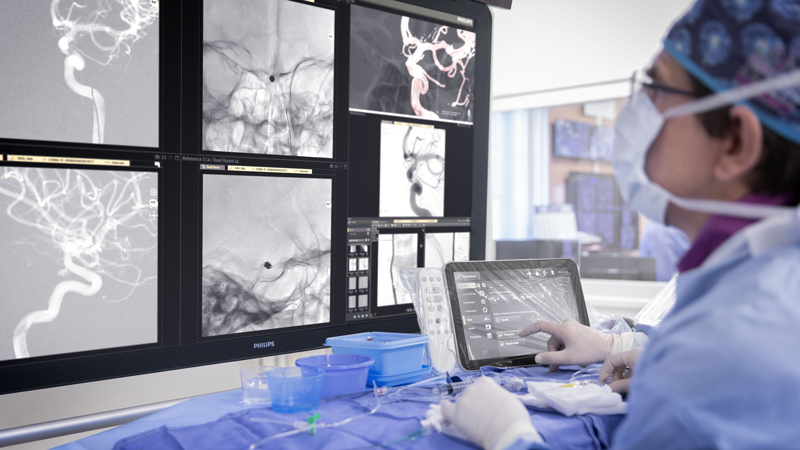
That interest has grown through interacting with people in the field, some directly, like Dr. Hooker, a neurologist at Aga Khan, and Dr. David Eagleman, a neuroscientist I’ve engaged with directly, he runs a podcast called Inner Cosmos. Others I’ve only engaged with through their work, like V.S. Ramachandran. The cases neurologists deal with day to day are genuinely fascinating, and how those cases inform practice is remarkable. Much of what we know about the brain’s functional organization comes from pathology, someone loses the ability to speak, walk or swallow, imaging reveals a hemorrhage or infection in a specific region, and from that you learn what that region controls.
That’s what makes the brain so compelling, it’s hidden inside the skull, you can’t access it directly, yet through examination and history alone you can often pinpoint the problem without opening anything. Unlike most other organs, where you often need to open the body to be sure. That’s why nearly every neurology textbook opens with the same question, where is the lesion, because localization is the foundational puzzle of the whole field. There are also questions further out, things like consciousness, that science doesn’t yet have the tools to fully investigate, which is part of why neuroscience and philosophy intersect. That’s ultimately why I chose neurology over neurosurgery, neurochemistry or neuropharmacology, it encompasses all of them and takes a more mechanistic view of the brain as a whole.
“Just through examination and history, you’re able to know where the problem is, without opening the skull.”
When did this interest in neurology actually start, and what did you do to build toward it?
It started more broadly, in science itself. On my LinkedIn, I actually wrote, in French, that I decided at age ten I would be a scientist. That was around class five. I only wanted to read science books, never languages, which were genuinely difficult for me at the time. At some point in high school I wanted to do astrophysics, until I realized how limited the opportunities were in Kenya for that.
I was also deeply interested in neuroscience generally, though I didn’t yet understand the differences between neurosurgery, neurology and the other subspecialties, I just knew I wanted to work with the brain. Even in biology lectures naming different brain structures, I paid close attention, because I knew that was where I wanted to end up. I started watching YouTube videos of well-known neurosurgeons and neuroscientists, and came across an Italian neurosurgeon, Dr. Sergio Canavero, around 2017, when I was in Form Three. He was discussing head transplant surgery, a protocol he called HEAVEN, and had attempted it on cadavers. It sounds strange, but at that age I found it fascinating, and it fed my growing interest.
From there I actively sought out anything related, webinars on neuroscience or neurology, articles on the brain, I made sure to attend or read them. I started writing my own articles too, for the AMSUN Gazette, one on consciousness, another on the nature of reality.
Had you done any research work specifically in neuroscience?
Not yet at that point. I had a project on epilepsy during my BSc, but the equipment needed for proper investigation, EEG, EMG, simply wasn’t available in the department at the time. I ended up switching to a project on gastroenterology instead, still within my degree requirements. From there I started looking for other ways to connect with people in the field. One of those was the Ubongo campaign, where I met Dr. Hooker at a round table discussion. I asked him a question about sensory substitution and augmentation, work being done at Silicon Valley by Dr. David Eagleman, and he told me it wasn’t currently happening in Africa to his knowledge, but encouraged me to think it through and stay in touch.
The concept itself is about using the fact that all neural information, whether sensory or motor, travels the same way, through electrical and chemical signals, the only real difference is the destination. So for someone with sensory neural hearing loss, for example, researchers at Silicon Valley have developed a vest that picks up auditory input from the environment and transduces it into electrical signals, bypassing the cochlear nerve entirely and delivering the information straight to the relevant brain region. The person can then respond to voices and commands despite the hearing loss. That’s sensory substitution. There’s also work on sensory augmentation, exploring whether humans could perceive entirely new kinds of sensory input, like magnetism or electromagnetic fields, beyond the basic senses we currently rely on for survival. Those are the frontiers I’d asked Dr. Hooker about, and at the time, nothing like that was being explored in Africa.
We heard from Dr. Lemashon about how mentors shaped his path to the Rhodes Scholarship. Who has been mentoring you, and how do you actually build that relationship?
I go back to a quote from Isaac Newton, in an 1675 letter to Robert Hooke, another physicist. He said if he had seen further, it was by standing on the shoulders of giants. It’s difficult to reach great milestones working entirely alone. You need people who are already ahead of you, in your specific field or more broadly, who’ve experienced what you haven’t yet, and who can help light the way.
“It’s difficult to achieve great milestones by just working alone. You need people who are already ahead of you.”
As for how to actually get mentors, it’s not a simple answer. You can’t just walk up to someone on the street and ask them to mentor you. It starts slowly, attending conferences, listening to what people are discussing, understanding the space. Most of my mentors came through research work and clubs. You need to join student organizations, because that’s where these people actually interact with students directly, at conferences, career talks, events where they’re listening to you and what you want to do. If it matches what they’re doing or their own ambitions, they’ll see a reason to invest in you. You don’t sit in your room emailing ten professors and wait for one to reply saying they’ve agreed to mentor you.
“You don’t sit in your room emailing ten professors and wait for one to say yes I will mentor you. It has to come naturally.”
For research, most of my mentorship has come from Dr. Boni Maxime Ale, an internal medicine physician from Benin. I met him through work with the Kenya Diabetes Study Group. He runs two research organizations, Health Data Acumen and Holo Global Health Research Institute, focused on research training and management. When we started working together, he noticed I was genuinely passionate about science and publications, and invited me to join Health Data Acumen, a pan-African research organization, where I started as a junior research assistant doing data collection and management. After I’d done well there, he encouraged me to join Halo, the bigger organization, where we’ve worked on several studies, some of which are now in the process of being published. That kind of interaction is where mentorship happens naturally, they start sending you courses and opportunities tailored to what you actually want.
It’s the same story with French. Dr. Mulure, based in Switzerland, is the founder and current patron of AFREM. I met him through club meetings, online and in person. You talk to someone, realize they’ve published work, worked with Francophone organizations, and you mention your own research or interest in a course. In their mind, they recognize someone whose goals align with theirs, and from there they start telling you what’s possible. That’s the real way to find mentors, not cold emails or approaching people in the street. It has to come naturally, through supervisors, lecturers, people like Dr. Andrew of Oncology, who mentors a lot of students even outside his specialty, simply because he makes himself available to talk, including in round table settings. Mentorship grows naturally out of that kind of access.
Outside of academics, do you read?
Yes, mostly non-fiction. A lot of it is about the brain, the neuroscientists I’ve already mentioned. I also read a lot about evolution, especially Richard Dawkins, I think I have a full physical collection of his books. I read a lot of philosophical work too, particularly around consciousness, people like Annaka Harris and David Eagleman. When it comes to fiction, I only read French fiction, mostly Pierre Bordage, his books deal with space exploration and alien civilizations.
Is the fiction reading more of a hobby?
Exactly, it’s fun, you don’t have to think too hard, you just read and move on. Non-fiction is different, it’s harder to finish because it activates your curiosity. You read a chapter and you’re left thinking about what the author is actually saying, forming your own opinion on it. So fiction is for fun and interest, non-fiction is for curiosity and interest.
What impact has reading had on you? Has it made you different from your peers?
I think reading changes how you think and how you approach problems. If you look at how these books are structured, how information is conveyed, especially case-based accounts from doctors describing their careers from childhood passion to eventually becoming leaders in their field, it trains you in different ways of approaching problems, not just academic ones. It builds a kind of inner focus, a self-driven quality. It’s not just for fun, it genuinely changes how your brain works.
“Reading changes how you think and how you approach problems, not just in medicine.”
If you had to recommend just one book to a medical student, which one?
The Tell-Tale Brain, by V.S. Ramachandran. He gives a case-by-case account of what I’d call the weird and wonderful neurological cases he’s managed throughout his career, things like synesthesia. It has genuinely fascinating case studies, even if neurology isn’t your interest.
What do you expect from the internship itself?
I’m going in with an open mind, I’m not entirely sure what to expect, but I’m hoping to see neurology practiced at a more advanced level of care. Neuro-interventional radiology, for instance, is something I haven’t had the chance to observe here in Kenya, it’s being done, but I haven’t seen it firsthand. It’ll be valuable exposure to how a more advanced healthcare and research system operates.
I’m also hoping to find collaborative opportunities, particularly around research and exchange programs between teaching hospitals in France and the University of Nairobi. It’s an ambitious goal, but I’d like to help expand exchange and internship opportunities for Kenyan medical students more broadly, not just through the University of Paris-Saclay, there are many hospitals under the AP-HP umbrella. That said, I think the fundamentals of patient care, ethics, how you manage patients, are the same everywhere. The difference is likely in technology and turnaround time.
What would you tell medical students who want to pursue similar opportunities, or are just starting to build their profile?
There’s a line from a show called Young Sheldon that stays with me, an episode about a piano-playing dog. Professor Salzman says that sometimes the right question to ask of a piano playing dog, is not, ‘Are you a dog?’, but are you any good at playing the piano?’ Being in medical school can feel special at first, but eventually you have to ask yourself, everyone here is doing an MBChB, that’s significant, but am I doing anything different, anything more? You need to start asking that early, because building toward a scholarship takes years. You can’t wait until sixth year to start, by then you’ll either run out of time or your profile won’t be strong enough.
“Everyone here is doing an MBChB. The question is, am I doing anything different, anything more?”
“You can’t wait until sixth year to start building your profile. You’ll either run out of time, or it won’t be strong enough.”
My advice is to start now, get involved in community health outreach, leadership, research, academia. The problem is most people focus purely on medicine and surgery, and at the end of the day, everyone graduates with the same degree. What separates you from a classmate with the same MBChB is what else you’ve done, research, leadership, a foreign language, outreach work. I recently came across a fully sponsored African public health conference happening in November, and one section of the application was compulsory, whether you’d participated in any community outreach program. Some applicants were already doctors pursuing an MMed, genuinely strong candidates. The only outreach work I’d done was with Professor Marianne Mureithi, a program called Beauty’s Liver Deep, where we went around Nairobi educating communities on liver disease, particularly hepatitis B, prevention and management, using kinyozis and salons as our entry points.
Putting that one experience into my application helped me qualify out of over 10,900 applicants. A small thing I did on holiday in fourth year ended up mattering that much later. If I hadn’t done my B1 in third year, I doubt I’d have gone on to B2, and without that I wouldn’t have qualified for this scholarship, and I wouldn’t be here for this interview. So my advice is simple, start early, and let these small things accumulate into something significant.
“One thing I did on my holiday in fourth year helped me qualify out of over 10,900 applicants.”