


From Wanting to Design Buildings to Becoming a General Surgeon: A Conversation with Dr. Nthambi
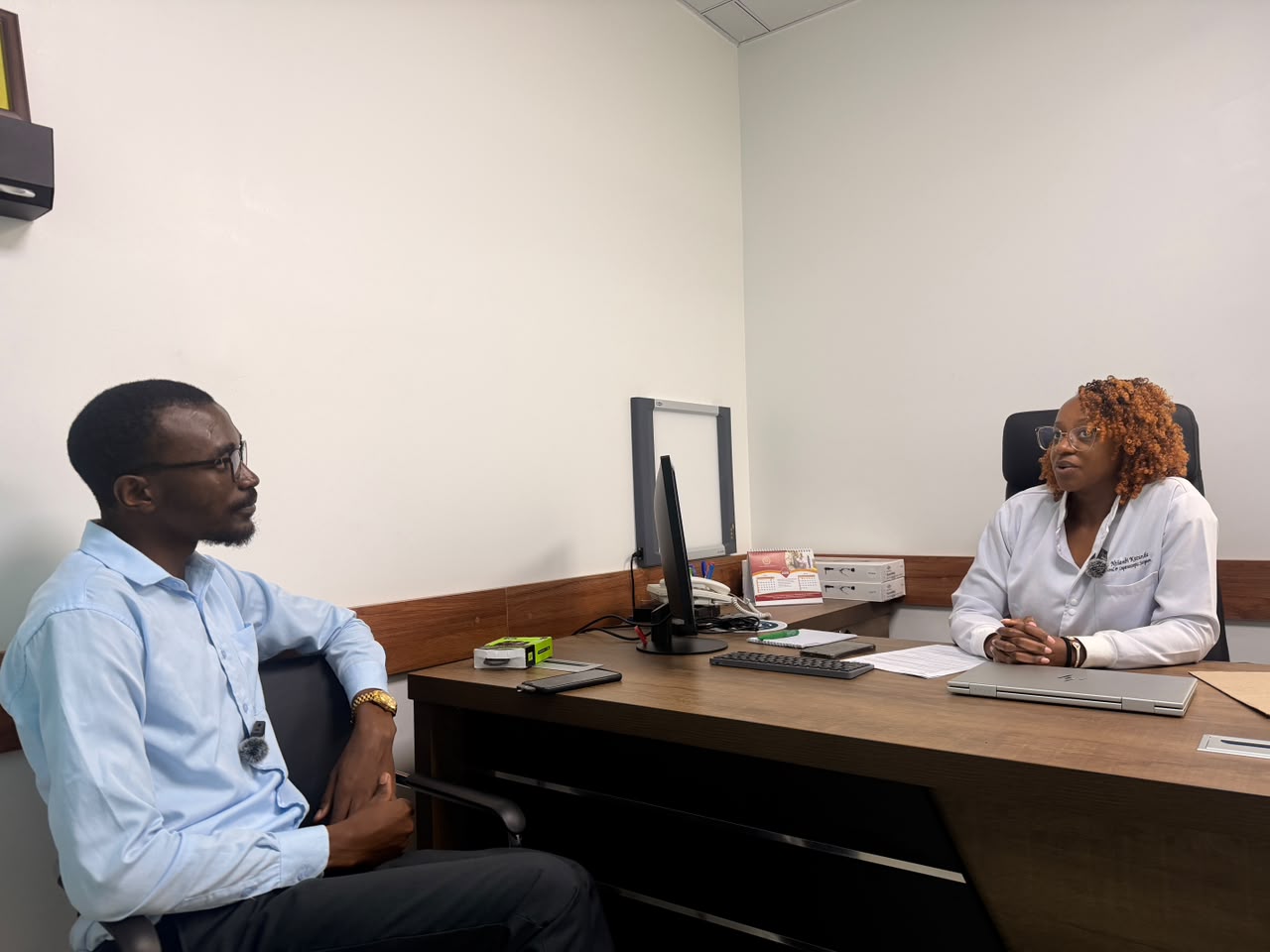
Dr. Penina Nthambi never planned on becoming a surgeon, she barely planned on becoming a doctor at all. A self-described artistic soul with an eye for organizing spaces, she was headed for architecture school until her mother convinced her otherwise. Today, Dr. Nthambi is a General Surgeon at Kenyatta National Hospital, Vice Chairperson – Kenya Association of Women Surgeons, and one of a growing number of women reshaping what surgery in Kenya looks like. In this conversation with mTV’s Manu Wandera, she talks candidly about grief, ego, gender bias in the operating room, the myth that surgery is “just cutting,” and why she believes there’s no such thing as a 50-50 balance.
Chapter One: Beyond Scrubs
Who is Dr. Penina beyond being a surgeon?
That’s a difficult question. I’m also continuing to understand who Dr. Penina is beyond being a surgeon, because I am unlearning not to define myself with my career. The other things I do, outside my job at Kenyatta and my private work, I invest in healthcare, I also invest in real estate, and I’m a dog mom. So that’s who I am outside surgery.

How did you discover your passion for medicine?
Funny thing, I actually had not considered being a doctor before. I am a very artistic person, I like organizing spaces, so my heart was set on architecture. But my late mom challenged me to get into the field of medicine, and once I started, I knew it is what I would want to do forever.

How did you take that, your mom wanting you to be a doctor? Was it like you were being coerced?
No, I was not being coerced. How she did it, she went to university, got the application forms, gave them to me to fill in everything except that top faculty part, and then she was like, “Let’s just try medicine.” I was like, “Fine.” So she filled Faculty of Health Sciences, then I got accepted and started, and from there, I knew there’s nothing else I’d want to do. It’s that trust and belief that your parents know you.
“It’s the trust and belief that your parents know you. I understood that she knew me very well, and since I started, I know there’s nothing else that would make sense in the world for me to be doing right now.” — Dr. Nthambi
I’ve come across students who were forced into medicine and end up having difficulty. What would you tell them?
I think parent-children relationships have evolved over time, with that I would advise them to have an honest conversation with their parents. If that’s not an option and they have the support and sponsorship to finish, they should just go ahead and finish. Once you finish, you have your papers, you can start the work, and then you pivot. Because even in terms of how healthcare is right now, you can do many other things that are healthcare-related that do not involve direct patient care. If one is not keen on patient-centered medicine, they will struggle, and their patients will suffer. So let them finish the school part and then pivot onto other things they’d like to do.
Chapter Two: Why Surgery
Why did you choose to go into surgery?
My father is a physician, a cardiologist, one of the pioneer ones in the country, and I just was not interested in what he does, no offense. Even in undergrad I didn’t like internal medicine, because, they’re really brilliant doctors, but I feel like they never fix the problem. The patient is forever on treatment. If you look at the NCDs, patients are constantly on treatment, nothing is being sorted out. It’s a bit frustrating.
When I moved as an MO to another facility, I had good mentors, Dr. Ngera and Dr. Murithi, and they’re the ones who actually saw the potential in me for surgery. Then, unfortunately, in 2018 I lost my mom to cancer. Her death came with a curiosity about surgery. I believe that cemented my choice. Good mentorship and lived experience, basically.
What particularly made you not like Internal Medicine?
I feel like they shoot in the dark too much. For surgery, it is, this is this, this is what we do for this, and then we sort it out. There’s also the hands-on that comes with surgery, it allows your artistic side to come alive as well. The grasping of anatomy in 3D, suturing, it’s very intriguing.
Chapter Three: The Weight of Training
What was your biggest challenge during surgical training?
I had a full-time job, working in Kenyatta Accident and Emergency. Daytime was for school, so I had to take on a lot of night shifts or sell my shifts. It was quite difficult to balance the two. But by the grace of God, I managed, I was the only person in my class that got a distinction in one of the senior examinations.
Chapter Four: A Woman in Surgery
What is the reality of being a woman in surgery, and generally in medicine?
I think in surgery, we are fighting an uphill battle, but at least now the world is coming to accept that women too can be surgeons The studies coming out show that female surgeons tend to have better outcomes. It’s a space we are still fighting to fit in to, because everything was structured in a way that was favorable to men. Quite a few times I will be here in the office, and a patient will come and say, “Okay, so is the doctor not in…” and I’m like, “Well, this is who you get to sort you out today.”
Through the Kenya Association of Women Surgeons, we are pushing to make policies that will make surgical training, and the practice itself, more accommodating to women. I don’t think any young woman who wants to do surgery should be afraid.
“We are fighting to fit in, and we are fighting to be ourselves, in a space that was built for men.” — Dr. Nthambi
You mentioned women tend to have better outcomes. What could be attributed to that?
I would attribute that to the fact that we are nurturing beings. That’s how we approach everything, decision-making, treating the patient, there’s that aspect of nurturing that gives more wholesome care. As for men, no offense, you’re decisive, but sometimes the ego can take over. I’d say it’s the fact that we were made to be mothers, it is in us to nurture.
Have you ever experienced gender bias, and how did you handle it?
Patients will always assume you’re not the doctor, either you’re the nurse or a patient assistant. You just assert yourself, you know your stuff, you earned this position as any other man. It was initially offending, even from undergrad, when the classes were more male than female. You just assert yourself, understand your community, because that’s what they know, they know men are doctors and women are nurses. I’m not disregarding nurses, they are such strong pillars in the health care eco system, but that’s what is perceived. You just be yourself, prove yourself as a doctor, correct politely, and move on.
Apart from patients, have you experienced it with colleagues or administration?
No, I’ve actually not experienced this. I’ve grown in Kenyatta, and the men who came before me are very supportive, good mentors, they make the environment comfortable to work in. I’ve not struggled with that personally, I thank God for that, because I know things are bad in other places.
On the positive side, has being female ever worked in your favor?
Yes, there are particular communities and religions that prefer female doctors. They would say, “I want an all-female team,” from anesthesia to everything, and they request for that.
Chapter Five: What Makes a Great Surgeon
What qualities make somebody a great surgeon?
Put your ego aside and be teachable, medicine is a continuous learning process. Understand that surgery begins before surgery, don’t assume you know, even if you’ve done a procedure many times, it doesn’t hurt to go over it before you start. Know when not to operate, that comes with time. Understand good patient selection, it impacts your outcomes. Learn to work as a team, never assume you can do everything alone, the term “general surgeon” doesn’t mean you do everything anymore, that went away a long time ago.
For a medical student who hasn’t started practicing, what should they build early?
Work on their resilience, it’s not a happy-go-lucky field. Yesterday we were in theatre for almost five hours, you need to focus, concentrate, be on it. Be organized, the way you organize yourself is the way you organize your mind in the steps of surgery. Identify a mentor early, because there’s a perceived notion that surgery is just cutting. It’s not, it’s internal medicine and operating combined, you have to understand pathophysiology to decide when and why you’re operating. We read a lot, we still read a lot. It’s science and art combined.
“Whoever wants to be a surgeon should put that notion out of their head, it’s a lot of science and art combined.” — Dr. Nthambi on the myth that surgery is “just cutting”
How do you actually get better at the skill itself?
It’s practice, practice, practice. You don’t have to be a surgeon to start. Start early, get your hands on early, so your hand gets used to the skill. The way you suture in January is not the way you’ll be doing it by July, technique improves with time. If I compare the time I took to do a laparoscopic appendix as a resident, versus now, is very different, because of continuous practice.
Do video games help with that kind of hand-eye coordination?
Yes, actually very good for hand coordination, for laparoscopy and endoscopy. Endoscopy has wheels you manipulate while looking at a screen, laparoscopy uses instruments while looking at a screen. I do play, though I sold my console recently, I know I’ll go back to it at some point.
Chapter 6: The Cost and the Reward
What’s the most rewarding, and the most difficult part of your job?
The most rewarding is seeing a patient come in with a problem, you fix it, they go home, they’re fine. The difficult moments are the patients you lose, especially the ones who came in with good physiology, walking, but complications tip them over. With time you learn to practice without carrying guilt, especially if you know you did your level best. Those are the ones you never forget, and the ones you learn from the most.
How do you get through those difficult times?
It’s an emotional rollercoaster. I talk to a colleague, ask what I could have done better. I used to journal all my cases, that helps you release. The other thing is therapy, there are therapists who understand the workings of doctors, it helps a lot. I personally do, though I’ve absconded for a few months, but I’ll go back.
Do you see colleagues using unhealthy ways of coping?
Yes, a lot, in medicine generally, not just surgery. Unfortunately, our cadre is brilliant minds who opt to sort out issues our own way, so there is alcohol use and abuse in the general medical practice. Good support systems, friends you can talk to, and therapy, help you find healthier ways to process. I just hope, when you get to practice, don’t lean on that side of coping, it’s costly.
Chapter 7: Career, Family, Faith
Can women have both a successful surgical career and a personal life?
I don’t want to sell the notion of a 50-50 balance, there are times things have to give. If you’re a mom on call, you might have to leave a child with a nanny, or miss a sports day. There’s nothing like a 50-50 balance, you figure out what’s important, and you’re intentional about your priority at the moment. But it’s the same for men, if he’s building a home for his family, he sacrifices family time too. I guess the ultimate goal for everyone is enough passive income to practice on a schedule that doesn’t make you sacrifice what matters most.
“There’s nothing like a 50-50 balance, you just figure out what is important, and you’re intentional about what you decide is your priority at the moment.” — Dr. Nthambi, on career and family
What’s your take on the idea that a surgical career works against a woman’s biological clock?
Yes, the biological clock is there, but we’re grateful for technology. I did my fertility consult recently, I know I’m at a point where I can cryopreserve my oocytes. Being in this career pays well, so if you don’t have too much financial burden, it’s something you can comfortably do. I wouldn’t tell people to have children in a panic, it’s never an emergency. If God has destined for you to be a mother, you will be. There’s technology, yes, but also accepting God’s will in your life.
Some students feel pressure from their peers around this. Any advice?
There’s no pressure needed, the commitment of a family is not a light one. My number one guide, more recently, is prayer, seeking guidance from God so you’re not working to compete with people. If you look at great athletes, they don’t compete with the people around them, it’s them against themselves, being slightly better tomorrow. Live like that and you’ll never have to keep comparing yourself to everyone else. Keep God at the center, these are major life decisions, don’t rush them.
Chapter 8: Parting Wisdom
What do you wish you knew as a medical student?
I wish I knew that every patient you see, you should learn from. It consolidates your knowledge and makes practice easier later. Don’t just clerk for the sake of presenting. Clerk, examine, read, and integrate. Any case you encounter, carry it as a learning opportunity.
How would you advise students about finding a mentor?
Have your goals defined, what do you need this mentor for? It’s not just rocking up and saying “I want a mentor.” Approach them, say who you are, what you want to be, and ask to be taken under their wing. With the Kenya Association of Women Surgeons, we’re starting a more structured mentorship program connecting younger surgeons and students to experienced ones. It’s open to medical students too, not just residents and consultants, we invite you if you’re interested. It’s for women, I don’t know what the men are doing.

Last question, very specifically for a female student, what advice would you give her?
Don’t be afraid of it. It’s very fulfilling, and it’s character-developing, even if you don’t want to grow as a human being, this field will make you. It’s interesting, it’s diverse, you won’t get bored. And we have good female support right now, through the Kenya Association of Women Surgeons, there are people you can lean on, people you can walk with. So I’d tell them to leap. Our outcomes are better, so, yes.
“Don’t be afraid of it. It’s character-developing, it’s interesting, it’s diverse. So I’d tell them to leap.” — Dr. Nthambi, closing advice to female students
Good job Dr . Nthambi may almighty God 🙏 give you more years you continue helping