


Poor Women Have Been Selling Their Breast Milk for Centuries
Summary: Paid breastfeeding and paid milk are old trades, and in almost every version of them the milk moved from poor women to wealthier infants. That history is the reason regulated milk banks today take donations rather than purchases.
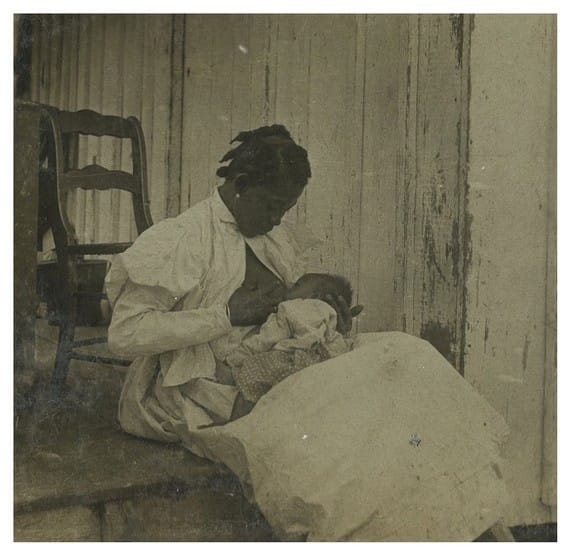
Wet nursing is the oldest form. A wet nurse is a woman who breastfeeds a child that is not her own, for payment or under obligation. Before safe formula, a baby whose mother had died or could not feed had two options, another woman’s breast or animal milk. Poor women sold their milk this way, and for centuries it was one of the few paid trades open to women. The Code of Hammurabi, around 1750 BC, already regulated wet nurse contracts. In Rome, women were hired at the Columna Lactaria.
France industrialised it. By the eighteenth and nineteenth centuries the state ran a Bureau des Nourrices, and urban families sent infants out to rural wet nurses in large numbers. Mortality among those infants was high. The women taking the work were poor, and their own children often lost out.
In the American South, enslaved women were forced to nurse white infants. That was not a trade. It was coercion, and it carried the same cost to their own babies.
Selling expressed milk came later, with the first milk banks. Vienna opened one in 1909 and Boston followed in 1910. These banks paid donors by the ounce, and the donor pool was mostly poor and working class women for whom the money was useful. The practice faded through the middle of the century as formula took over and as banks moved to unpaid donation on safety and ethical grounds.
It has not ended. Informal milk selling continues online in many countries with no regulation and no screening. In the last decade a United States company was buying milk from mothers in Phnom Penh for resale to American parents, until Cambodia banned the exports.
The pattern is consistent enough to be the point of the story. Wherever breast milk has been bought, it has moved from women with less money to infants with more.
Payment also creates a clinical problem before it creates an ethical one. If milk is worth money, there is an incentive to over-express, to dilute it, or to hide an illness or a medication that should have disqualified the donor. Screening becomes harder precisely where it matters most, since donor milk goes to premature and sick newborns.
That is why regulated milk banks today accept donations rather than purchases, and screen donors the way blood transfusion services do. The rule is not squeamishness about paying women for their labour. It is a direct response to what happened every time the milk was bought.